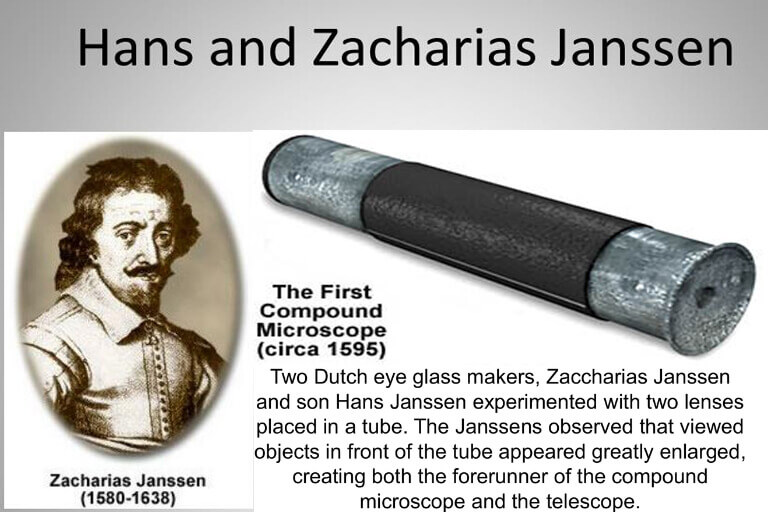
The advent of the microscope represented a significant leap forward in the scientific exploration of the human body and the understanding of disease. While the genesis of the first microscope remains uncertain, it is widely attributed to Zacharias Janssen, a Dutch spectacle maker born in 1585. Janssen is celebrated for crafting one of the earliest compound microscopes—devices that utilize two lenses—around the turn of the 17th century. These initial microscopes wielded the power to magnify objects up to 20 or 30 times their actual size, enabling previously unseen worlds to be brought into focus for the first time.
Antonie van Leeuwenhoek’s pivotal advancements in the field of microscopy in the 1660s revolutionized the scientific world. Leeuwenhoek, a Dutch tradesman and scientist, crafted simple microscopes through meticulous lens grinding, which were more akin to magnifying glasses. Equipped with just a single, high-quality lens, these rudimentary yet effective tools could magnify an object by a factor of up to 200 times. This allowed Leeuwenhoek to venture into uncharted territories, exploring intricate animal and plant tissues, human sperm and blood cells, minerals, fossils, among many other previously unseen microscopic phenomena. His groundbreaking observations were presented to the esteemed Royal Society in London, a platform that also hosted other prominent microscopists of the time, such as Robert Hooke.
In a significant leap for science, Antonie van Leeuwenhoek and Robert Hooke, key figures in the 17th century scientific revolution, paved the way for advances in the field of microscopy. Van Leeuwenhoek, a Dutch pioneer, crafted his own lenses, leading to the creation of simple yet powerful microscopes capable of magnifications up to 200 times. His observations ranged from animal and plant tissues to human sperm and blood cells, and even fossils and minerals. Meanwhile, in London, Hooke too was making groundbreaking discoveries with his compound microscope. His publication ‘Micrographia’ (1665) featured a remarkable collection of copper-plate illustrations of his microscopic observations. Among his many contributions, Hooke’s description of “pores” in cork slices stands out, as he was the first to use the term ‘cell’, thus unwittingly identifying the fundamental unit of life.