Hippocrates, often dubbed the “Father of Modern Medicine,” significantly impacted the field through his extensive work, with more than 70 books to his credit. His rigorous, scientific approach to the study of diseases set a new standard in medical practice. Around 2400 years ago, Hippocrates meticulously observed and described various illnesses, alongside their respective treatments, laying the groundwork for many contemporary medical procedures and theories. His contributions remain a cornerstone in medicine, embodying the transformation from prehistoric medicine to a more systematic and logical study of health and disease.
Born on the island of Kos, Hippocrates lived a long and accomplished life, passing away on the outskirts of Larissa at the age of 104. Much of his teaching and writing were done under the cool shade of a voluminous plane tree, the supposed descendant of which is believed to be 500 years old and considered the oldest tree in Europe. Known as the “platanus orientalis Hippocraticus,” this tree boasts a remarkable 15-meter diameter. Hippocrates’ wisdom extended beyond the realm of medicine, as evidenced by his decisive role in saving Athens from a devastating plague epidemic. In recognition of this feat, he was highly honored by the Athenians, further cementing his legacy as a pivotal figure in ancient Greece.
Hippocrates held in high regard the teachings of Democritus, a preeminent figure known as the “Father of the Atomic Theory.” As a physician, Hippocrates was summoned to look after the health of Democritus, a task he accepted without any expectation of financial remuneration, signifying the depth of respect and camaraderie he felt towards his teacher.
Hippocrates is also celebrated for his insightful medical aphorisms, some of which continue to guide current medical practice. Among them, “As to diseases, make a habit of two things -to help or at least to do no harm” emphasizes the core principle of medical ethics. He also noted, “Those by nature overweight, die earlier than the slim,” an early recognition of the health risks associated with obesity. His observation that “In the wounds, there are miasmata causing disease if entered the body” displays an understanding of the role of environmental factors in disease development.
Perhaps most strikingly, Hippocrates discovered the pain-relieving properties of an extract he referred to as “salycasia.” This substance, derived from a particular tree, bears a remarkable similarity to modern-day aspirin, underscoring Hippocrates’ pioneering role in the discovery and application of effective pain management techniques.
Hippocrates’ revolutionary perspective on epilepsy signified a significant advancement in understanding of the disease. Contrary to the prevailing belief of epilepsy being a sacred malady, he boldly declared it to be a hereditary brain disorder. He advised, “Do not cut the temporal place, because spasms shall occur on the opposite area,” demonstrating an early understanding of the brain’s complex neural mapping. His dietary recommendations mirrored his minimalist approach, suggesting that people during his time generally had one or two meals a day – lunch and dinner. He believed in moderation in all aspects of life, advocating for “little exercise…and walk…do not eat to saturation”, emphasizing the value of balance in maintaining health. Perhaps the most profound of his teachings was his declaration: “Physician must convert or insert wisdom to medicine and medicine to wisdom”. This dictum is equally relevant today, and if adhered to by all scientists, it could indeed foster greater happiness on earth.
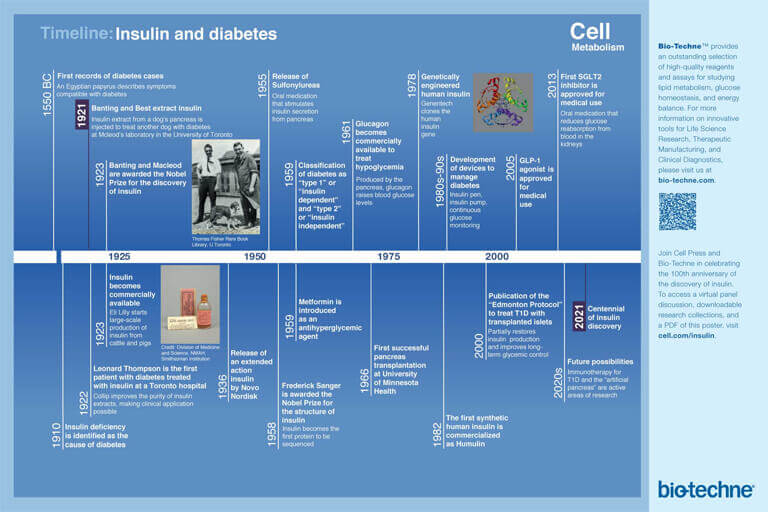
The groundbreaking discovery of insulin by Oskar Minkowski and Joseph von Mering in 1889 has played an instrumental role in diabetes treatment. After observing that dogs developed symptoms of diabetes and died shortly after the removal of their pancreas gland, they concluded that the pancreas was the production site for what they called “pancreatic substances”, now known as insulin. Further research honed in on the islets of Langerhans, specialized cell clusters within the pancreas. In 1910, Sir Edward Albert Sharpey-Shafer posited that people with diabetes lacked a single chemical in their pancreas: insulin. The term ‘insulin’ finds its roots in the Latin word ‘insula’, translating to ‘island’, a testament to its origin in the islets of Langerhans.
The scientific breakthrough by Frederick Banting and Charles Best in 1921 marked a monumental moment in the medical field. Despite initial skepticism, they successfully extracted insulin from a dog’s pancreas, creating what could only be described as a “thick brown muck”. Notably, this crude insulin extract kept a diabetic dog alive for 70 days, ultimately dying only after the extract ran out.
This success spurred Banting, Best, and their colleagues J.B. Collip and John Macleod to refine their discovery, resulting in a more purified form of insulin derived from cattle pancreases. In a landmark moment in January 1922, Leonard Thompson, a 14-year-old boy on the brink of death in a Toronto hospital due to diabetes, became the first person to receive an insulin injection, which dramatically reduced his dangerously high blood glucose levels to near-normal within 24 hours.
This life-saving discovery rapidly gained global attention, and in 1923, the Nobel Prize in Medicine was awarded to Banting and Macleod. Graciously, they shared the prestigious award with Best and Collip. We owe a debt of gratitude to these dedicated diabetes researchers for paving the way towards better management and treatment of diabetes.
The discovery of insulin has unequivocally revolutionized the treatment of diabetes, significantly improving and extending the lives of millions of patients worldwide. For years, insulin derived from cattle and pigs was the mainstay of diabetes therapy, however, it was not without its drawbacks. The primary issue was that it often incited allergic reactions in many patients. This issue was addressed in 1978 with the production of the first genetically engineered, synthetic “human” insulin using E. coli bacteria. By 1982, this biosynthetic human insulin was commercially available under the brand name Humulin, put forward by Eli Lilly, marking a significant advancement in diabetes treatment protocols.