
Access to affordable and reliable internet in the Arctic region is a pressing issue, requiring innovative and sustainable solutions. This necessity is driven by the region’s unique challenges, such as extreme weather conditions and geographical isolation, which have historically hindered communication infrastructure development. One potential approach is to leverage low Earth orbit (LEO) satellites, which can provide high-speed broadband service at a relatively lower cost. Additionally, collaboration with local communities and governments is vital to understand their specific needs and ensure the proposed solutions are culturally appropriate and environmentally sustainable.
In the midst of Canada’s worst forest fire season , the resounding success of Arctic’s first community network stands as a testament to the power of connectivity and the importance of access. This achievement illuminates an essential fact – despite the harsh environmental difficulties, the necessity for reliable internet services in these remote regions is unequivocal, and it can indeed be met with innovative solutions. The crippling forest fires underscore the urgency of this task, highlighting the potential for exacerbated fragmentation of the internet and the subsequent impact on communication if the existing hindrances to access are not addressed quickly and efficiently. Consequently, the significance of lowering these barriers becomes all the more apparent, as does the need to resist Internet fragmentation, thus ensuring that all communities, irrespective of their geographic location, can benefit from the opportunities offered by the digital age.
The technical solution took advantage of a LEO connection, employing it as a backhaul for the community network. This satellite-based connection transmitted data to and from the remote Arctic region, overcoming the geographic isolation that characterizes the area. The data received through the LEO backhaul was then disseminated across the community via a robust mobile network. This innovative approach provided the community members with free and reliable internet access, courtesy of custom SIM cards. These cards, tailored to the individual user’s needs, demonstrated the community’s adaptability in leveraging modern technology to surmount their unique connectivity challenges.
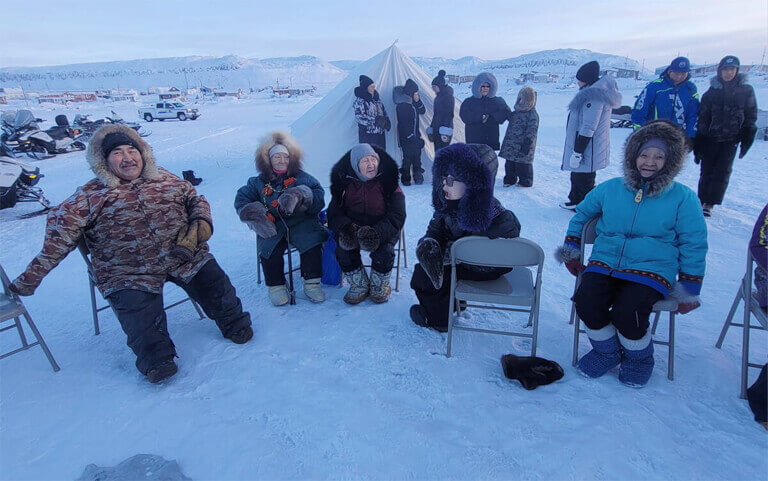
For the residents of Ulukhaktok, a community deeply rooted in traditions and reliant on the land for sustenance, the internet serves a critical function beyond simply facilitating communication or digital leisure – it is a tool for survival. The Inuvialuit community, still very much dependent on hunting and gathering as a traditional means of food security, often embarks on journeys over water and land. These excursions, while integral to their way of life, can pose considerable risks without the ability to communicate effectively or anticipate weather conditions. In this context, the ability to “check the weather” online, while seemingly trivial to many, carries significant implications for these residents who have lived and thrived in this community since time immemorial. Access to reliable internet, therefore, is not a luxury, but a lifeline, helping ensure their safety and the continuity of their cultural practices.