
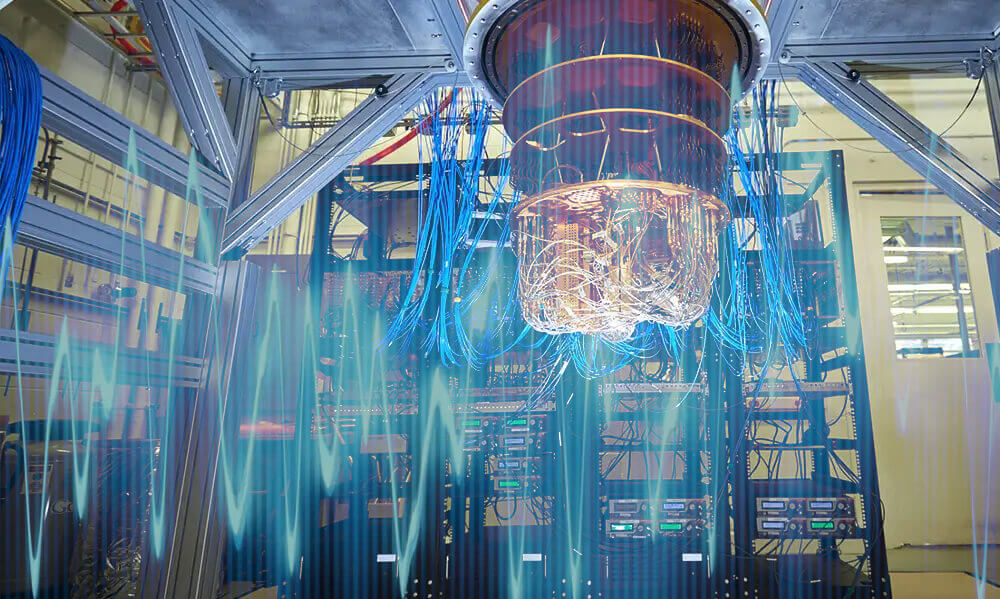
Sound-based quantum computers are a revolutionary new development in the field of computing. These computers use sound waves, instead of electricity or other conventional methods, to power their calculations. The idea behind this technology is that sound waves can be used to manipulate qubits, which are points of data in the quantum state. This makes quantum computing more efficient and powerful than traditional computers, as they can solve complex problems at much faster speeds. By using chip-sized devices, these computers can fit into smaller spaces and are easier to build and maintain.
One key advantage of sound-based quantum computers is that they offer significantly higher precision than conventional machines when it comes to calculating probabilities or predicting outcomes. This means that they can offer more accurate predictions for the future and provide better insights into complex problems. Additionally, these machines are able to process larger amounts of data since they use fewer physical components compared to traditional computers. This allows them to work faster, making them suitable for applications such as machine learning and artificial intelligence (AI).
Furthermore, sound-based quantum computers have potential applications beyond basic computing tasks. For example, they could be used in drug design and medical diagnoses due to their high precision levels when it comes to predicting outcomes and analyzing data sets. They could also be used in security systems as an additional layer of encryption due to their ability to quickly process large amounts of data with greater accuracy than traditional methods. Finally, these machines may potentially play a role in climate change research by helping scientists gain a better understanding of the Earth’s atmosphere and its response to changes in temperature or pressure over time.